

Leave Your Message
China Suppliers Factory Power Phase Converter 120/240V Split Phase to 120/208V 3 Phase for Industrial Equipment

Hot Products

Products Categories
Featured Products

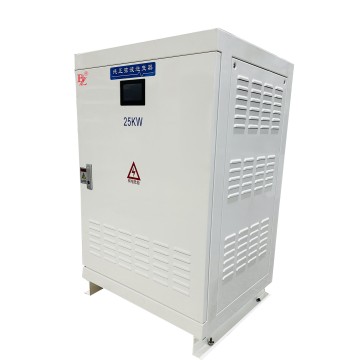
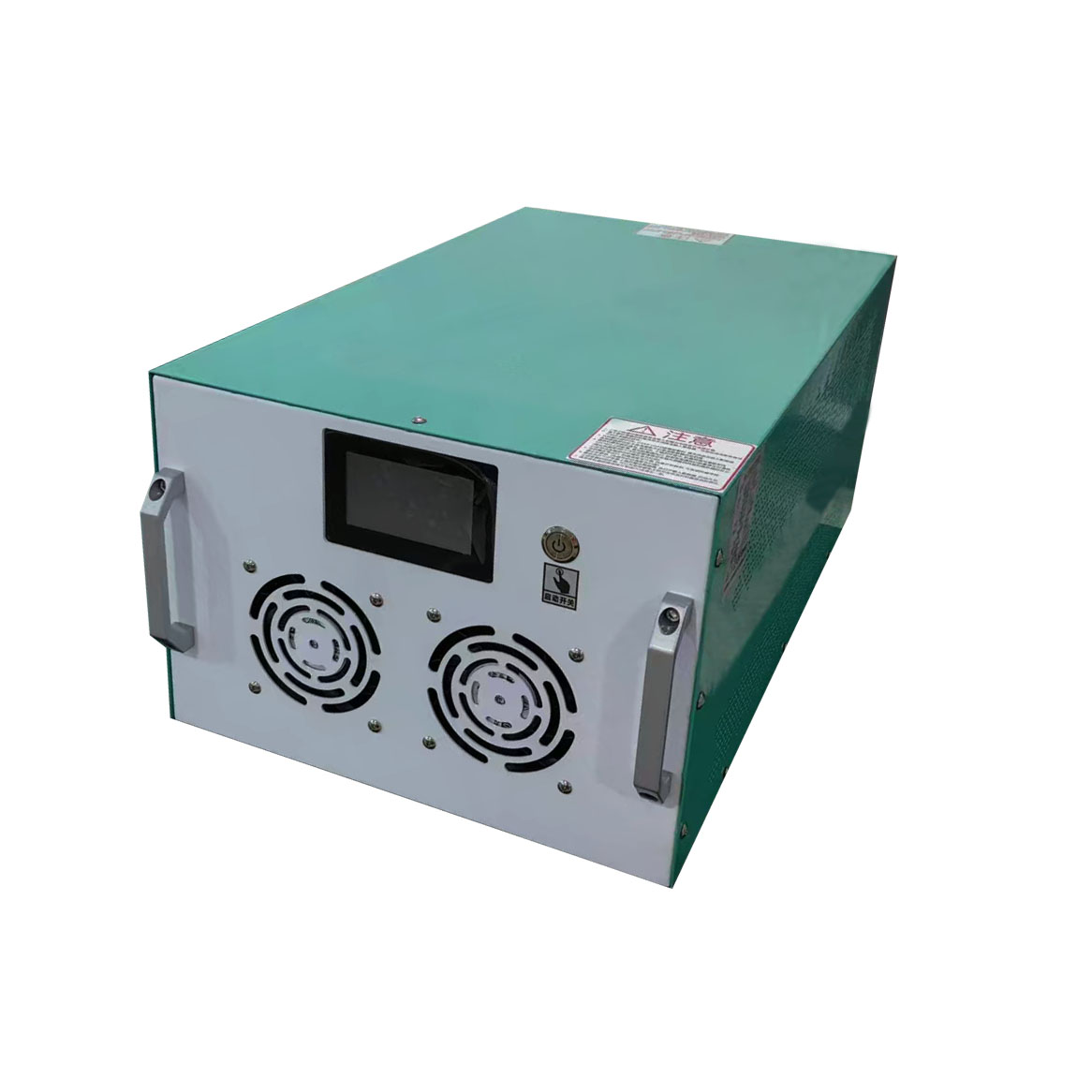
China Suppliers Factory Power Phase Converter 120/240V Split Phase to 120/208V 3 Phase for Industrial Equipment

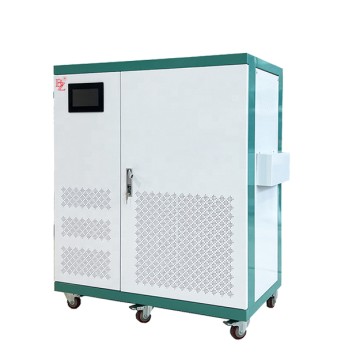
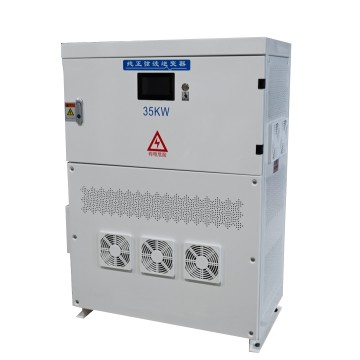
China factory suppliers offer high-quality power phase converters designed to transform 120/240V split phase to 120/208V three-phase power. These phase-splitting to three-phase converters are essential devices that convert single-phase or two-phase alternating current into reliable three-phase alternating current. They cater to various applications, including:

,

Powering three-phase equipment: Our converters provide a stable power supply for three-phase loads such as industrial motors, CNC machine tools, and lifts, especially in regions lacking three-phase mains or facing power limitations.
Voltage matching and step-up: These converters elevate single-phase 240V to three-phase 380V, ensuring compatibility with your equipment's rated voltage requirements.
Phase compensation and balancing: Advanced algorithmic control generates three-phase power with a precise 120° phase shift, effectively preventing any power imbalance issues that can occur during the conversion from single-phase to three-phase.

  • AC input 120/240V 60HZ
  • AC output 120/208V 60HZ

AC-DC-AC Conversion Structure
Rectification Stage

Converts single-phase alternating current into direct current (AC-DC), providing a stable DC source for subsequent inversion.

Inverter Stage

Utilises high-frequency switching devices (e.g., IGBT, MOSFET, IPM) and PWM modulation technology to convert DC to three-phase AC (DC-AC), precisely controlling output voltage, frequency, and phase.

Phase Generation Algorithm

Employs techniques such as SVPWM (Spatial Vector Pulse Width Modulation) to generate accurate three-phase sine waves, ensuring 120° phase separation and low waveform distortion.

Key Technical Characteristics
High Conversion Efficiency

Achieves conversion efficiency exceeding 94% with minimal no-load losses.

Rapid Dynamic Response

Exhibits short transient response times, adapting to sudden load variations.

Comprehensive Protection

Incorporates short-circuit, overload, and overtemperature protection to ensure safe equipment operation.
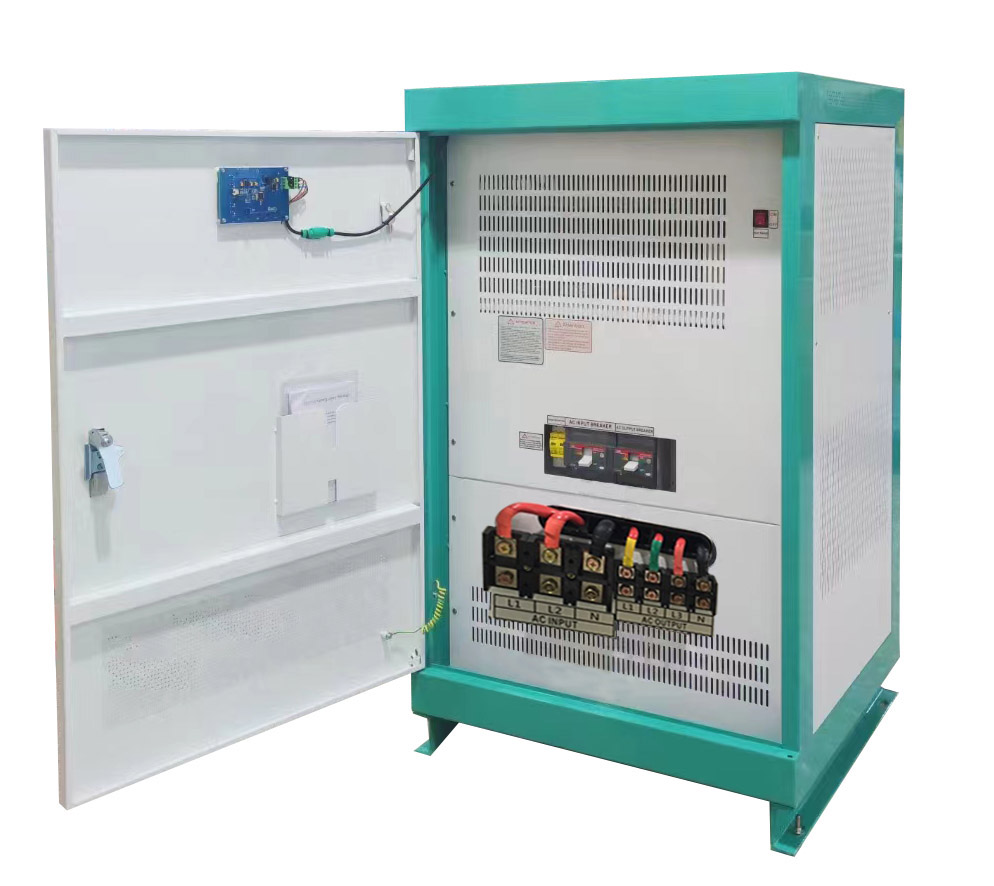
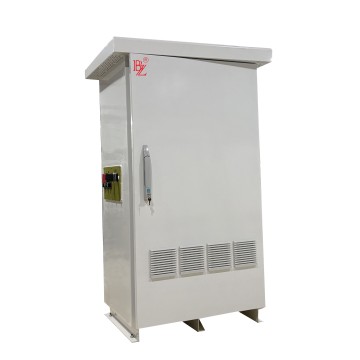
Stand Type
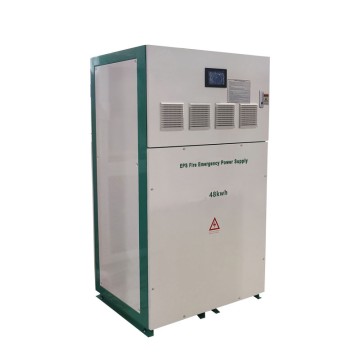
Split phase to 3 phase
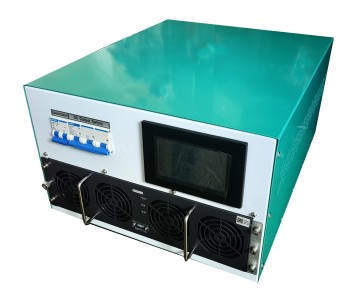
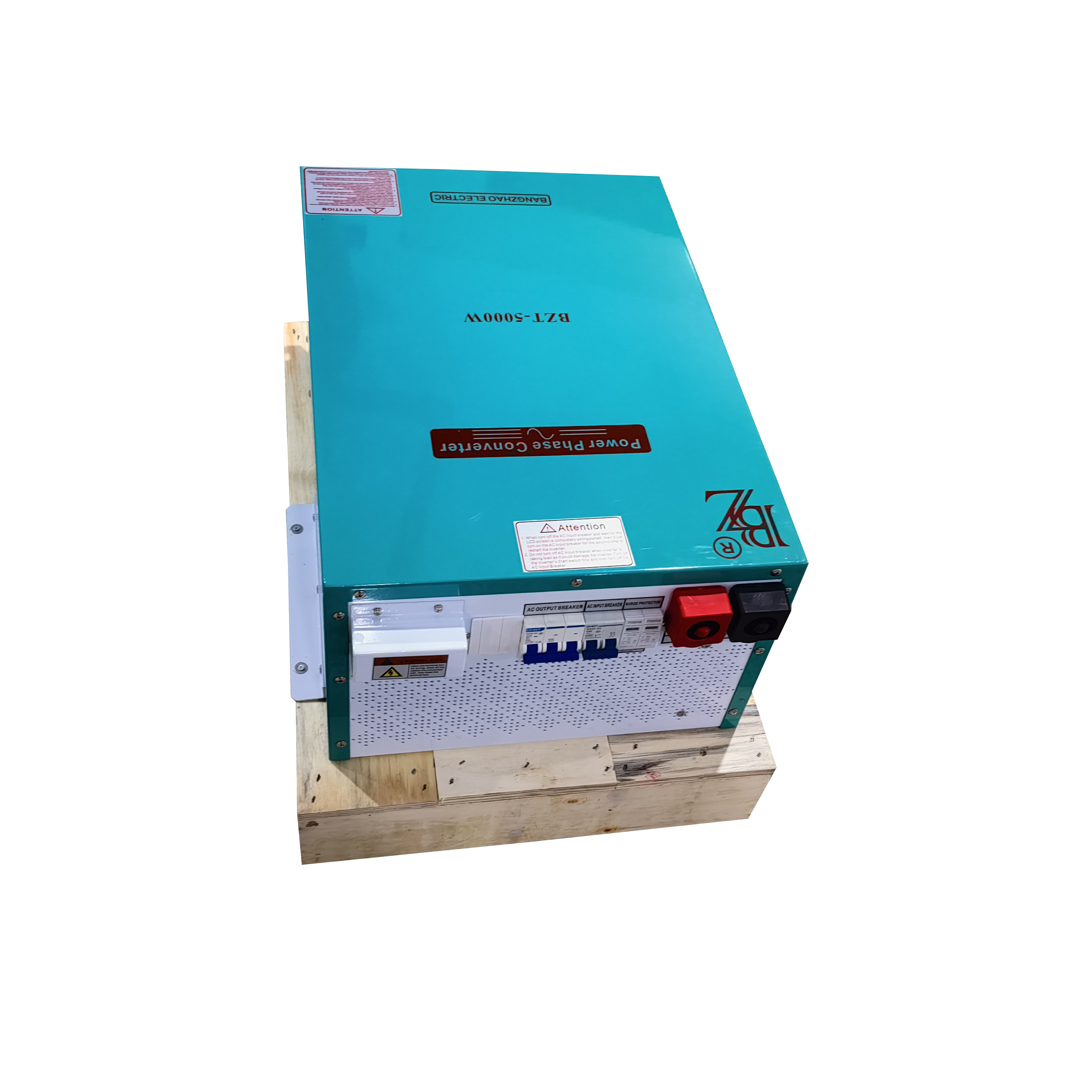
Rack Type
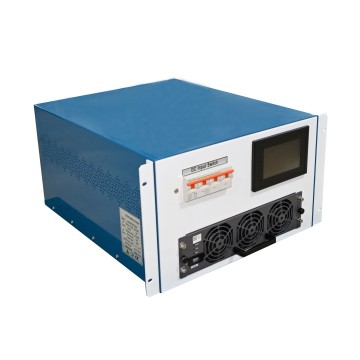
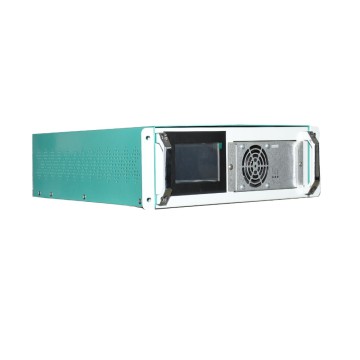
Rack type phase converter

Principle: Integrates rectification, inversion and control modules to generate three-phase electricity via the SVPWM algorithm.

Applications: High-precision motor drives, off-grid renewable energy systems, industrial automation, etc.

Features: Produces pure output waveforms and supports variable-frequency speed control, though at a higher cost.

Application Scenarios
Industrial Motor Drives

In factories lacking three-phase power, phase-splitting converters supply equipment such as CNC machine tools and compressors, ensuring uninterrupted production.

Case Study: An automotive components factory utilised BZT series converters to transform single-phase 220V into three-phase 380V, driving a 15kW motor with 90% efficiency and stable operation.
Off-Grid New Energy

Within photovoltaic and wind power systems, converts single-phase DC to three-phase AC for load operation, enhancing energy utilisation efficiency.

Case Study: A distributed PV project employs converters to achieve seamless integration between single-phase PV panel outputs and three-phase AC load operation.
Emergency Power & Standby Systems

Serves as supplementary three-phase power assurance for critical facilities such as data centres and hospitals, complementing UPS (Uninterruptible Power Supply) systems.

Case Study: A hospital utilised a phase-splitting three-phase converter to power operating theatre lifts during mains failure, ensuring safe patient transfer.
Selection and Usage Recommendations
Power Matching

Select converter capacity based on load power, typically allowing a 20%–30% margin to accommodate start-up surges.

Example: For driving a 7.5kW motor, a converter rated at 10kVA or above is recommended.

Waveform Quality

For inductive loads such as motors, prioritise output waveform distortion rate (THD) – select products with THD < 5%.

Environmental Adaptability

In high-temperature, humid, or vibration-prone environments, opt for converters with mains-frequency isolation transformers to enhance stability.

Frequently Asked Questions
Q What is an AC-DC-AC phase converter and how does it work?
An AC-DC-AC phase converter first rectifies single-phase AC into stable DC, then uses high-frequency switching devices (IGBT, MOSFET, or IPM) combined with PWM modulation to invert that DC back into three-phase AC output. The SVPWM algorithm ensures accurate 120° phase separation and low waveform distortion.
Q What conversion efficiency can I expect from these converters?
These converters achieve a conversion efficiency exceeding 94%, with minimal no-load losses. They also feature rapid dynamic response times, allowing the unit to adapt quickly to sudden changes in load demand.
Q How do I select the correct converter capacity for my motor?
Always choose a converter with a capacity 20%–30% above your motor's rated power to handle start-up surge currents. For example, if you are driving a 7.5kW motor, a converter rated at 10kVA or above is recommended.
Q What THD level should I look for when powering inductive loads?
For inductive loads such as motors and compressors, it is important to select a converter with a Total Harmonic Distortion (THD) rating of less than 5%. Higher THD values can cause overheating, reduced motor efficiency, and premature equipment wear.
Q Can these converters be used in off-grid renewable energy systems?
Yes. Phase converters are well-suited for photovoltaic and wind power systems, converting single-phase DC output from PV panels into three-phase AC for load operation. They enable seamless integration between single-phase renewable sources and three-phase AC equipment.
Q Are these converters suitable for harsh industrial environments?
For high-temperature, humid, or vibration-prone environments, it is recommended to choose converters equipped with mains-frequency isolation transformers. This enhances operational stability, provides additional electrical isolation, and extends the service life of the unit.

Leave Your Message